
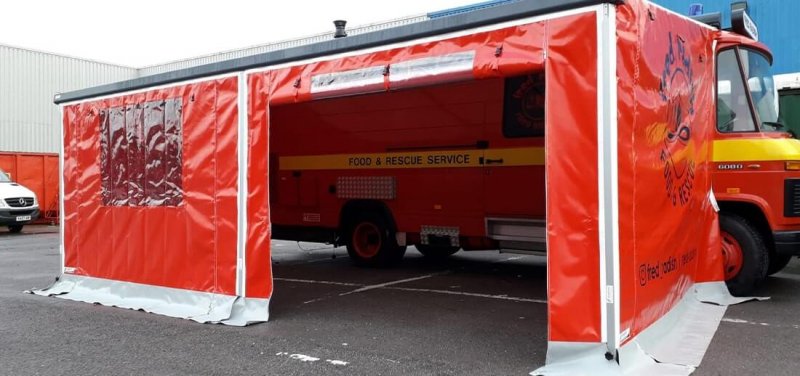
Customising Your Vehicle Awning
When choosing a vehicle-mounted awning, the way it’s specified can make a significant difference to how well it works day to day.
Customisation isn’t about adding every available option. It’s about making sure the setup suits the vehicle, the type of work being carried out, and the conditions it will be used in. Below are the main areas people typically consider, along with some practical guidance based on real-world use.
Choosing the Right Size
Size is one of the most important decisions, and it’s not always about going as large as possible.
The available mounting length, vehicle height, and how much space is actually needed alongside the vehicle all play a role. For some users, a compact projection is ideal for frequent stops and quick access. Others need a larger covered area for equipment, staff, or customers.
In practice, we often find that people benefit from thinking about how the space will be used rather than focusing on measurements alone.
Fabric and Material Options
The roof and side fabrics are designed to cope with regular outdoor use, including rain, wind, and UV exposure.
Different materials offer varying levels of durability, weight, and flexibility. For businesses operating year-round, prioritising strength and weather resistance usually makes more sense than choosing the lightest option available.
It’s also worth considering how often the awning will be deployed, as frequent use places different demands on materials over time.
Frame and Cassette Construction
The frame and cassette form the structural core of the system.
Aluminium constructions are commonly used due to their balance of strength, corrosion resistance, and manageable weight. This is particularly important for installations that are opened and closed regularly.
A well-designed cassette also helps protect the fabric when stowed, which can extend its lifespan and reduce maintenance.
Side Panels and Enclosures
Adding side or front panels can turn an open canopy into a more sheltered working space.
These are often used when wind protection is needed or when a more enclosed area is required for privacy or temperature control. Window panels can be included to maintain visibility and natural light.
From experience, this is one of the most common upgrades for people who start using their setup more frequently or in exposed locations.
Colour and Branding Choices
Colour selection is often driven by practical considerations as much as appearance.
Lighter colours can help reflect heat in warmer conditions, while darker shades may be chosen to match vehicle livery. Branding and graphics can also be added where visibility or recognition is important.
For many users, keeping the design simple and legible tends to work best in busy or public environments.
Accessories and Additional Features
Optional extras can add convenience, but they’re most effective when chosen with a clear purpose in mind.
Lighting, support legs, or heating solutions are often selected based on how long the space is occupied and the time of year it’s used. In some cases, keeping the setup straightforward improves reliability and speed of use.
A common mistake is adding features that rarely get used, which can complicate setup without adding real value.
Making the Right Choices
Customising an awning works best when decisions are guided by how it will actually be used rather than what looks good on a specification list.
Factors such as wind exposure, setup frequency, storage space, and vehicle type all influence which options make sense.
If you’re unsure which features will genuinely support your work, speaking to someone with experience fitting these systems can help you avoid unnecessary complexity and ensure the final setup works as intended.


For expert advice and a wide selection of customisable vehicle awnings, get in touch with our team today by calling us on 01202 679012 or completing the enquiry form.

